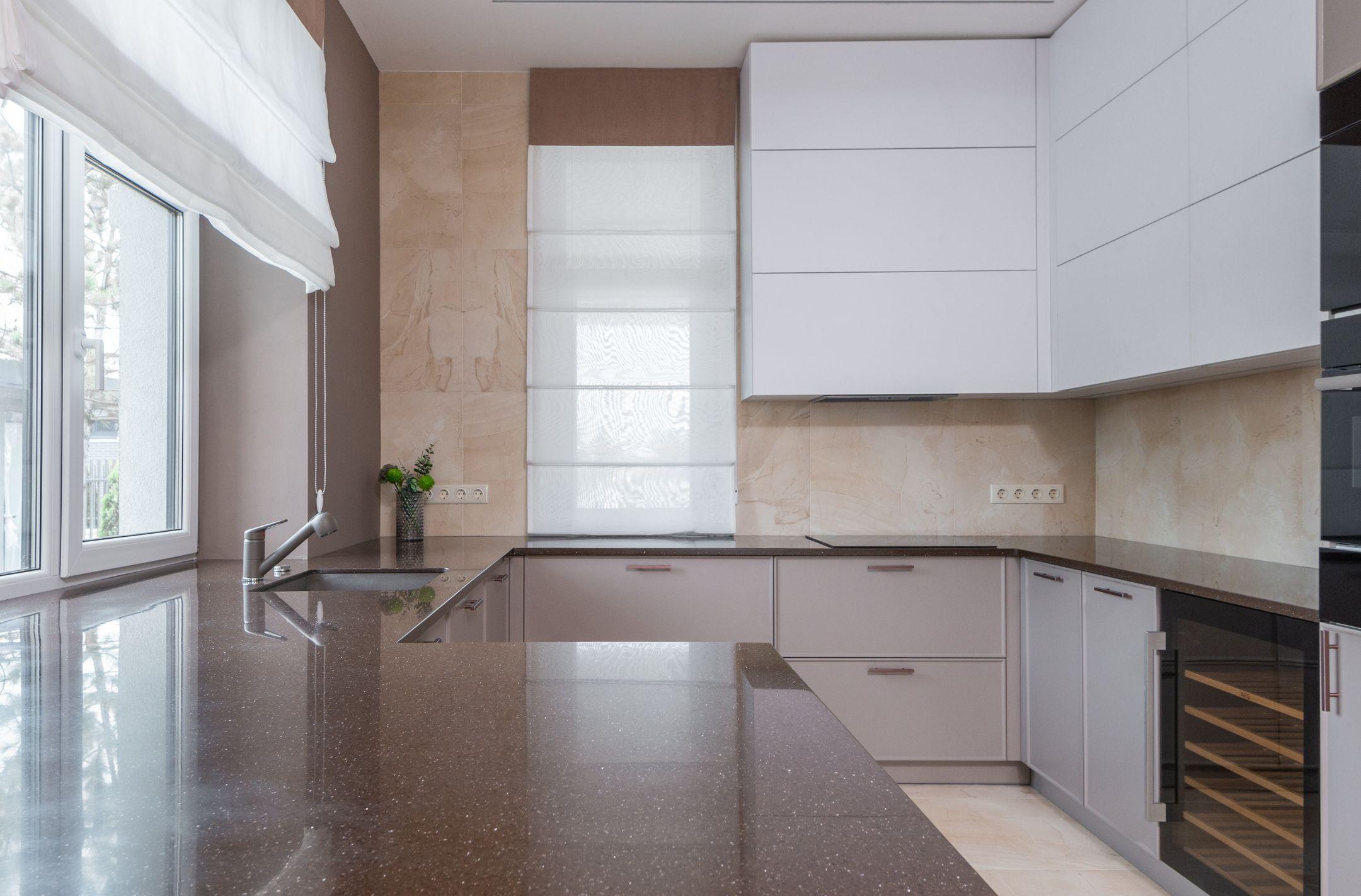
Custom countertops are one of the most visible and frequently used features in a kitchen or bathroom. They provide essential workspace, influence the overall design, and often represent a meaningful part of the remodeling investment.
Whether a homeowner selects granite, quartz, or another high-quality surface, proper maintenance helps preserve its appearance and performance. The right cleaning habits can prevent staining, dullness, heat damage, and unnecessary wear while keeping the room looking polished for years.
At Advanced Construction and Design, we help homeowners throughout Lancaster, Palmdale, and the Antelope Valley choose countertop materials that support both the design and daily function of their homes. We also encourage clients to understand how their selected material should be cared for after installation.
The best care routine depends on the type of surface, but a few practical habits can help protect nearly all custom countertops.
Countertop care starts before the surface is installed.
Different materials have different strengths, maintenance needs, and sensitivities. A surface that works beautifully for one household may not be the most practical choice for another.
Before making a selection, we encourage homeowners to consider:
A busy family kitchen may benefit from a low-maintenance surface that is easy to clean. A homeowner who appreciates the natural variation of stone may prefer granite and be comfortable with periodic sealing.
Our designers help clients compare practical performance alongside color, pattern, edge profile, and overall appearance. That way, the finished surface is not only beautiful but also appropriate for the way the room will be used.
One of the simplest ways to preserve a countertop is to clean spills before they have time to dry or absorb.
This is especially important with strongly colored or acidic substances such as:
Natural stone may absorb certain liquids when they remain on the surface too long, particularly if the sealer has begun to wear. Engineered materials may resist many stains, but allowing spills to sit can still leave residue or discoloration.
Blot spills rather than spreading them across a larger area. After removing the substance, clean the surface with an appropriate mild solution and dry it with a soft cloth.
Prompt cleanup is often more effective than relying on a harsh product later.
Strong cleaners are not always better cleaners.
Abrasive powders, bleach-heavy products, acidic solutions, and rough scrubbing pads may damage the finish of certain countertops. Over time, they can cause dull spots, discoloration, or premature wear.
For routine cleaning, warm water, a soft cloth, and a small amount of mild dish soap are often sufficient. After wiping the surface, rinse away any soap residue and dry it with a clean microfiber cloth.
Drying the countertop can help prevent streaks and mineral deposits, particularly around sinks and faucets.
Before using any specialty cleaner, check whether it is approved for the specific countertop material. Products marketed as general kitchen or bathroom cleaners may not be appropriate for every surface.
When in doubt, follow the care instructions provided by the manufacturer or installer.
Scrubbing pads, steel wool, and rough cleaning brushes can scratch or dull a countertop’s finish.
Even materials known for durability can develop visible wear when repeatedly cleaned with abrasive tools. Polished finishes may be especially likely to show fine scratches under direct lighting.
Use soft cloths, microfiber towels, or nonabrasive sponges for daily cleaning. For dried food or residue, soften the material with warm water before gently lifting it away.
Do not scrape the surface with knives, metal utensils, or tools. A plastic scraper designed for delicate surfaces may be appropriate in some situations, but it should still be used carefully and according to the material’s care instructions.
Countertops may feel solid enough to cut on directly, but knives can damage the surface and the surface can damage the knives.
Direct cutting may leave scratches, marks, or dull areas. It can also wear down the knife blade and create sanitation concerns when food is prepared directly on the counter.
Use a stable cutting board for chopping, slicing, and food preparation. Consider keeping separate boards for produce, raw meat, and other ingredients to make cleaning and organization easier.
A cutting board protects the countertop while creating a dedicated preparation zone. It is one of the simplest habits homeowners can adopt after a kitchen remodel.
Hot cookware should not be placed directly on a countertop, even when the material is described as heat resistant.
Heat resistance does not mean a surface is immune to damage. Sudden temperature changes may cause discoloration, cracking, scorching, or stress within the material. Engineered surfaces may also contain resins that can be affected by concentrated heat.
Use trivets, hot pads, or heat-resistant mats beneath:
Small appliances can produce heat underneath or around their bases, especially during extended use. Protective mats and proper ventilation can help reduce unnecessary exposure.
In bathrooms, heated styling tools should be placed on a heat-safe surface rather than directly on the vanity countertop.
Countertops are designed to support everyday items and normal household use. They are not intended to function as steps, ladders, or seating.
Standing or sitting on a countertop can place concentrated pressure on unsupported areas, seams, overhangs, and narrow sections near sinks or cooktops. This may contribute to cracking or separation.
Use a proper step stool when reaching high cabinets. Children should also be discouraged from climbing onto counters or hanging from overhangs.
This is particularly important around islands with extended seating areas. An overhang may be properly supported for dining use but still should not be treated as a climbing surface.
Granite is a natural stone known for its durability, rich variation, and long-lasting appearance. Each slab has its own pattern and movement, which can give a remodeled kitchen or bathroom a distinctive character.
For routine granite care:
Granite may also require periodic sealing. The frequency depends on the stone, the sealer, and the amount of use the surface receives.
A simple water test may provide a general indication of the sealer’s condition. Place a few drops of water on the countertop and observe whether they remain on the surface or begin to darken the stone. If the water absorbs quickly, the countertop may need to be resealed.
However, homeowners should follow the recommendations provided for their particular slab and installation rather than relying on a universal schedule.
Proper sealing can help granite resist moisture and staining, but it does not eliminate the need for prompt cleaning.
Quartz is popular for its consistent appearance, broad range of colors, and relatively simple maintenance.
Because engineered quartz is generally nonporous, it typically does not require sealing. It also resists many common household stains. However, it still needs proper care.
For routine quartz maintenance:
Heat protection is particularly important with quartz. The material often contains resins that can be affected by high temperatures or sudden thermal changes.
Homeowners should also be cautious with solvents, paint removers, oven cleaners, and concentrated chemicals. These products may damage the finish or cause discoloration.
Quartz is easy to maintain, but treating it as indestructible can shorten its life and compromise its appearance.
The area around the sink receives more moisture and cleaning-product exposure than almost any other part of a countertop.
Standing water can leave mineral deposits, create dull residue, and affect seams or caulking over time. In bathrooms, toothpaste, soap, cosmetics, and grooming products can also accumulate around the faucet and sink edge.
After using the sink, wipe away excess water. Pay close attention to:
If the home has hard water, regular drying is particularly helpful. Mineral deposits are easier to prevent than to remove after they have hardened.
Homeowners should also watch for damaged or separated caulking. If water is entering a seam, the issue should be addressed before it affects the surrounding materials.
Countertop organization affects maintenance as well as appearance.
When a surface is crowded with small appliances, containers, toiletries, and decorative objects, spills and moisture may remain hidden underneath them. Those areas can also collect dust, crumbs, and cleaning residue.
During a kitchen or bathroom remodel, thoughtful storage can help keep frequently used items accessible without covering every surface.
In kitchens, we may plan:
In bathrooms, an appropriately sized vanity, medicine cabinet, shelving, or recessed storage can reduce countertop clutter.
Clearer surfaces are easier to clean and allow the selected stone or quartz pattern to remain visible.
Bathroom countertops may be exposed to products that are more concentrated than typical household cleaners.
Hair dye, acetone, nail polish, facial treatments, peroxide, and certain styling products may stain or damage a surface if they spill. Even items that seem harmless can leave rings or residue when stored in the same place for long periods.
Use trays or organizers beneath frequently used products. Clean any drips immediately and avoid leaving open containers directly on the countertop.
Soap dispensers, toothbrush holders, and cosmetic containers should be lifted periodically so the area beneath them can be cleaned and dried.
This simple routine helps prevent buildup and protects the vanity surface from prolonged product exposure.
The edges of a countertop can be more vulnerable to impact than the broad center of the slab.
Heavy cookware, appliances, tools, or decorative objects should not be dropped or struck against corners. Chipped edges can be difficult to repair invisibly, particularly on patterned materials.
Use care when moving stools, ladders, or large objects through the room. Avoid leaning heavy items against countertop edges during cleaning or home projects.
Edge selection during the remodeling process can also influence appearance and practicality. Some profiles are more detailed, while others are streamlined and easier to maintain.
Our designers help clients evaluate how an edge profile fits the overall room, the material thickness, and the way the countertop will be used.
Minor issues are usually easier to address before they become significant.
Homeowners should occasionally inspect their custom countertops for:
Not every variation is a sign of damage. Natural stone contains color changes, veins, and markings that are part of its character. However, a new crack, shifting seam, or area of persistent moisture should be evaluated.
Attempting a repair with an unsuitable adhesive, polish, or chemical may make the problem more difficult to correct. Professional guidance is often the safest approach for damage beyond normal cleaning.
General care advice is helpful, but countertop products can vary.
Different manufacturers may use unique finishes, resins, sealers, coatings, or fabrication methods. A cleaner that is acceptable for one material may not be recommended for another.
Keep any care documents provided after installation. If a manufacturer recommends a specific product, cleaning process, or sealing schedule, follow those instructions.
Avoid experimenting with online cleaning remedies unless they are confirmed to be safe for the exact material. Common household ingredients such as vinegar, lemon, baking soda, and bleach can damage certain surfaces when used incorrectly.
Protecting the countertop is more important than following a cleaning trend.
Daily maintenance matters, but proper fabrication and installation provide the foundation for long-term performance.
Measurements must account for cabinets, walls, appliances, sinks, faucets, and overhangs. Seams should be planned thoughtfully, and the countertop needs proper support. Cutouts and edges also require precise fabrication.
At Advanced Construction and Design, we coordinate countertop selection with the broader kitchen or bathroom remodeling plan. Our in-house team considers cabinetry, layout, plumbing, lighting, fixtures, and material transitions together.
Clients can review granite, quartz, cabinetry, and coordinated finishes at our Lancaster showroom by appointment. Seeing materials together helps homeowners make selections that suit the room aesthetically and practically.
Because our kitchen cabinets are built in-house from raw sheets of wood, countertop planning can also be coordinated with the cabinetry dimensions and storage layout. The result is a more cohesive relationship between the work surface and the features supporting it.
A countertop does more than complete the room visually. It supports cooking, preparation, cleaning, grooming, storage, and many of the routines that take place every day.
Proper care does not need to be complicated. Promptly cleaning spills, using mild products, protecting the surface from heat, and avoiding direct cutting can make a significant difference over time.
The most important step is understanding the material. Granite, quartz, and other surfaces each have their own characteristics. When homeowners choose a countertop that fits their lifestyle and follow the correct maintenance guidance, the surface can continue to perform and look beautiful for many years.
At Advanced Construction and Design, we help homeowners throughout Lancaster, Palmdale, and the Antelope Valley create kitchens and bathrooms that balance appearance, function, and lasting value. Our coordinated remodeling process brings the designers, construction team, custom cabinet maker, and material-selection experience together under one roof.
Schedule a consultation with our team to begin planning your kitchen or bathroom remodel. We can help you explore custom countertops, cabinetry, layouts, and finishes that suit your home while creating a space that feels efficient, polished, and distinctly your own.
 Advanced Construction And Design