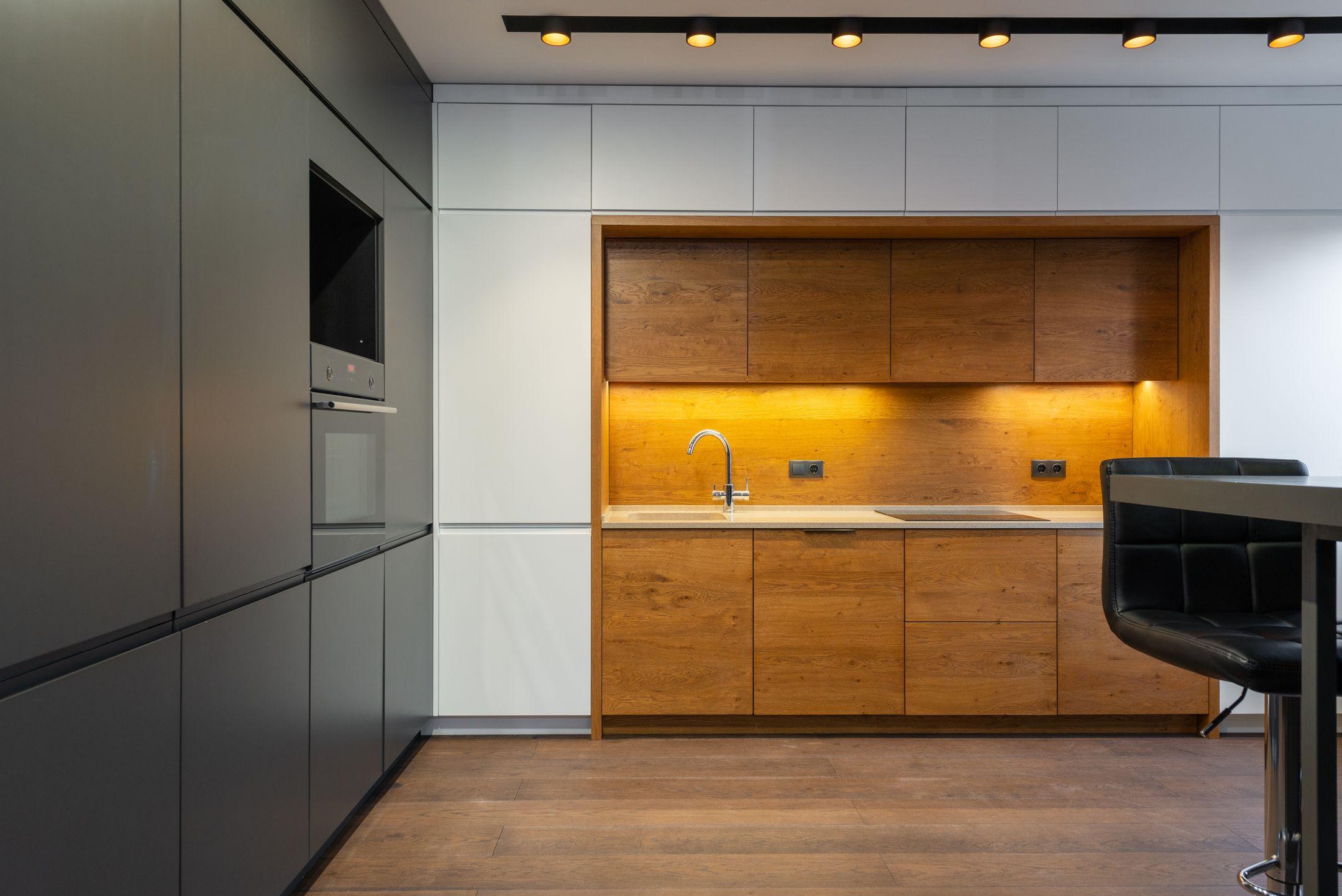
Two-tone cabinets have become one of the most requested kitchen design choices—and it is easy to understand why. Using two complementary cabinet finishes can make a kitchen feel more customized, visually balanced, and connected to the homeowner’s personal style.
When homeowners ask us about trending kitchen cabinet colors, we often encourage them to look beyond a single paint swatch. The best cabinet color decision considers the kitchen’s layout, natural light, countertops, flooring, storage needs, and connection to surrounding rooms.
A two-tone kitchen can be bold or subtle. Navy lower cabinets paired with white uppers create a crisp contrast, while natural walnut beside matte black produces a warmer, more contemporary look. The key is choosing colors intentionally and incorporating them into a complete remodeling plan—not simply selecting two popular shades and hoping they work together.
Many homes throughout Lancaster, Palmdale, and the Antelope Valley were originally built with standardized layouts and finishes. While these kitchens may have worked for the home’s first owner, they do not always reflect the needs or preferences of the families living there today.
Two-tone cabinetry offers an opportunity to individualize the space without making it feel overly trendy. It can also help us:
Because we build custom kitchen cabinets in-house from raw wood materials, we can plan cabinet dimensions, storage, finishes, and color placement around the room itself. Rather than forcing a standard cabinet package into an existing space, we design cabinetry to fit the kitchen and the way the family intends to use it.
Before we discuss cabinet colors, we look closely at the kitchen’s structure and function. Color cannot correct an inefficient work area, a poorly placed appliance, or inadequate storage.
Our designers evaluate how the family cooks, gathers, entertains, and moves through the room. We may recommend changing the cabinet configuration, opening or repositioning a wall, adjusting window placement, adding an island, or using taller cabinetry to take advantage of vertical space.
This planning stage is especially important in tract homes. A builder-grade kitchen may include awkward corners, limited drawers, undersized cabinets, or an island that interrupts the natural flow of the room. A remodel gives us the opportunity to improve the skeleton of the space before selecting its finishes.
Once the layout is working efficiently, two-tone cabinetry can emphasize the strongest parts of the design.
A successful two-tone kitchen usually has a dominant cabinet color and a secondary accent color. Giving both colors equal visual weight can make the room feel divided or overly busy.
In many kitchens, we use the lighter or quieter shade as the dominant finish. It may cover the upper cabinets and most of the perimeter, allowing the darker or richer color to highlight the island, lower cabinets, pantry wall, or beverage station.
For example:
The second finish should feel purposeful. It needs a clear beginning and ending point rather than appearing randomly on individual doors or cabinet sections.
One of the most dependable two-tone arrangements is placing the darker color on the lower cabinets and the lighter color on the uppers.
Dark lower cabinets visually ground the room and are often practical for active households. Light upper cabinets help preserve an open feeling around eye level, particularly in kitchens with limited natural light or lower ceilings.
Navy lowers with white uppers remain a popular example, but the same principle works with many combinations. Deep green can be paired with warm cream, charcoal with soft white, and rich wood tones with pale neutral paint.
We also consider the amount of upper cabinetry in the room. A kitchen with full-height cabinets on several walls may need a more restrained color contrast than a kitchen with open shelving or only a few upper cabinets.
A contrasting island is an excellent introduction to two-tone cabinetry. It creates dimension while keeping the surrounding cabinets cohesive.
The island can also connect other elements in the room. A dark island might coordinate with black window frames or hardware, while a stained wood island can add warmth to a kitchen with painted perimeter cabinets.
However, the island should do more than look attractive. During a kitchen remodel, we consider whether it can improve the room with:
The best kitchen features contribute to both beauty and everyday efficiency.
Countertops are one of the most important links between two cabinet colors. Because the countertop often touches both finishes, it can help the kitchen feel unified.
A light quartz countertop with subtle veining can soften dark lower cabinets while complementing white or cream uppers. A warmer stone can connect walnut cabinetry with painted neutral cabinets. Granite with more movement may work best when the cabinet colors are relatively simple.
At our Lancaster showroom, clients can review quartz, granite, cabinet finishes, and other material samples with our designers by appointment. Seeing materials together is much more reliable than choosing each item separately from a screen or small photograph.
We evaluate undertones carefully. A cool white cabinet can clash with a warm cream countertop, even when both appear neutral on their own. The wood stain, paint color, stone, backsplash, hardware, and lighting should all feel like parts of one design.
The latest trending kitchen cabinet colors can be a helpful source of inspiration, but a remodel should not be built around trends alone. Cabinetry is a major investment and should continue to feel appropriate for the home for years.
For homeowners who enjoy color but are concerned about longevity, we may recommend using the bolder shade in a limited area. A navy, forest green, or matte black island can add personality without covering every wall.
Natural wood is another lasting choice. Walnut or warm wood cabinetry can be paired with painted cabinets to create contrast while keeping the kitchen grounded and inviting. Wood also helps soften modern finishes, clean lines, and black accents.
We encourage clients to consider what they consistently enjoy—not only what is appearing most often in design photos.
Two cabinet colors already create visual interest, so the rest of the kitchen does not need to compete with them.
A restrained backsplash, coordinated hardware, and thoughtfully selected countertop can allow the cabinetry to remain the main feature. That does not mean every other element must be plain. It means each material should have a clear role.
A kitchen combining walnut and matte black cabinets, for example, might benefit from a lighter countertop and simple backsplash. Navy and white cabinetry can be paired with warm metal accents to prevent the room from feeling too cool. Greige and natural wood may work beautifully with subtle stone movement and understated hardware.
Lighting also influences how each color appears. We consider natural light, overhead lighting, task lighting, and the changing appearance of finishes throughout the day.
Two-tone cabinetry should look connected to the rest of the house. An ultra-modern black-and-white kitchen may feel out of place in a home with warm traditional finishes unless the surrounding areas are also being updated.
Our designers help clients look at the big picture. We consider the relationship between the kitchen, dining room, living space, windows, walls, and existing architectural features. Our role extends beyond selecting decorative items—we help determine how the structure, layout, materials, and major finishes can work together to support the family’s daily life.
This approach is particularly valuable when remodeling an older or builder-designed kitchen. We can identify which elements should remain, which should change, and where the remodeling investment will have the greatest impact.
Although two-tone kitchens offer plenty of design flexibility, a few mistakes can keep the finished space from feeling cohesive.
Cabinet samples should be reviewed alongside the actual countertops, backsplash, flooring, lighting, and hardware being considered.
Two colors may look compatible online but clash when placed together in the home. Warm and cool undertones need to be balanced deliberately.
The color transition should follow the architecture or cabinetry layout. Islands, lower cabinets, pantry walls, and dedicated zones create natural places to introduce a second finish.
Beautiful cabinetry cannot compensate for inadequate storage or an awkward layout. We establish the functional plan first and use color to strengthen it.
A color pairing should suit the home and homeowner. The goal is not to recreate someone else’s kitchen—it is to create a space that feels personal, efficient, and enduring.
Two-tone cabinets are still trending because they give homeowners more freedom to create kitchens with depth, warmth, and personality. When the colors are selected as part of a complete remodeling plan, they can also make the layout feel more intentional and help highlight the room’s most useful features.
At Advanced Construction and Design, we bring kitchen design, construction, custom cabinetry, and material selection together through one coordinated team. Our cabinets are built in-house, and our owner-led process helps maintain clear communication and consistent craftsmanship from the initial design through installation.
We serve homeowners throughout Lancaster, Palmdale, and the Antelope Valley who are ready to transform builder-grade or outdated kitchens into spaces that feel more functional, efficient, and uniquely their own.
Schedule a consultation to begin planning your kitchen remodel and explore the cabinet colors, custom storage options, countertops, and layout changes that can bring the entire space together.
 Advanced Construction And Design